A fruit is still alive after it is picked, and it is still breathing. Every extra degree roughly doubles its respiration rate, and faster respiration means faster consumption of the sugars and water it has stored. That is why a two-hour delay in the field under the sun costs days of shelf life.
Pre-cooling
We start pulling the core temperature down as soon as the produce is packed, not after it has been trucked in. The aim is to reach target storage temperature within a few hours of picking. The method depends on the crop:
- Forced-air cooling — for grapes, strawberries and peppers.
- Hydro-cooling — for leafy vegetables and carrots.
- Room cooling — for onions and potatoes, after field curing.
Every crop has its own temperature
There is no single temperature that suits everything. Potatoes held too cold convert starch to sugar and change behaviour when fried. Tomatoes below 10°C lose flavour and never recover it. Our temperature table is built variety by variety.
Documentation
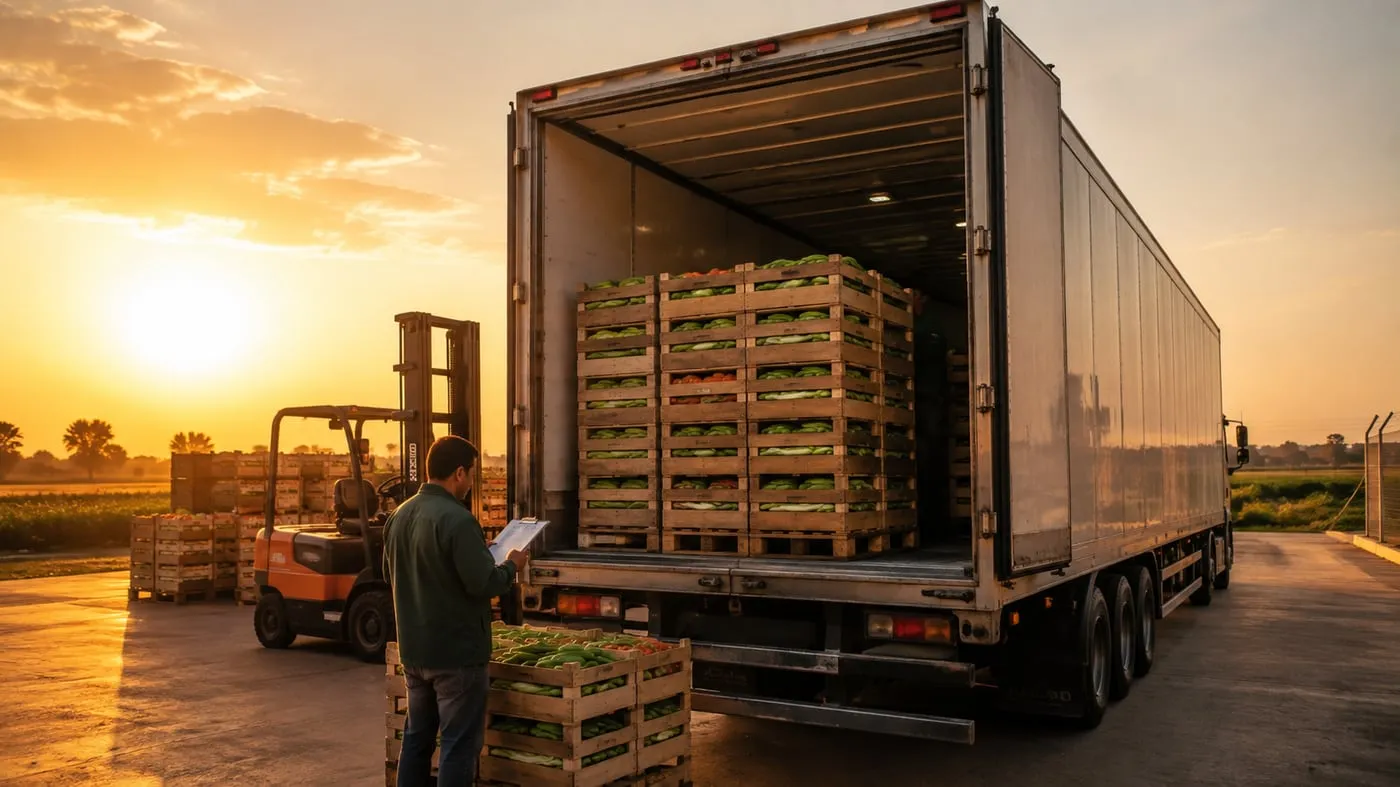
Every reefer container leaving our station carries a temperature logger. The data is handed over with the shipping documents — because what isn't measured can't be guaranteed.